SpaceX CEO Says Lunar Refueling Needs Fewer Flights Than NASA Panel Warns
Elon Musk disputes a safety advisory estimate of 22 Starship launches, claiming only six to eight will be required for the 2028 Moon landing.
By Noah Rao ·
For astronauts planning to step onto the Moon in 2028, the path to the surface depends on a precise calculation of fuel. A dispute over that math has emerged, with SpaceX CEO Elon Musk arguing that the number of support flights required is far lower than the figure cited by a NASA safety advisory panel.
The disagreement surfaced following a quarterly public meeting held on Thursday by the Aerospace Safety Advisory Panel. Charlie Precourt, a panel member and former NASA astronaut, identified the refueling of SpaceX’s lunar lander as a primary risk for the Artemis IV mission. Precourt noted that the current estimate stands at approximately 22 flights. "We need to keep our eyes on numerous required fuelings for the lander," Precourt said.
Musk responded to the remark after Ars Technica reporter Eric Berger shared it on X. "That's way too high," Musk wrote in reply. "Actual number will be more like 6 to 8." The difference between these two figures has tangible consequences for the mission timeline. Each tanker flight represents a full rocket launch, adding cost, time, and potential points of failure before a crewed spacecraft departs Earth.
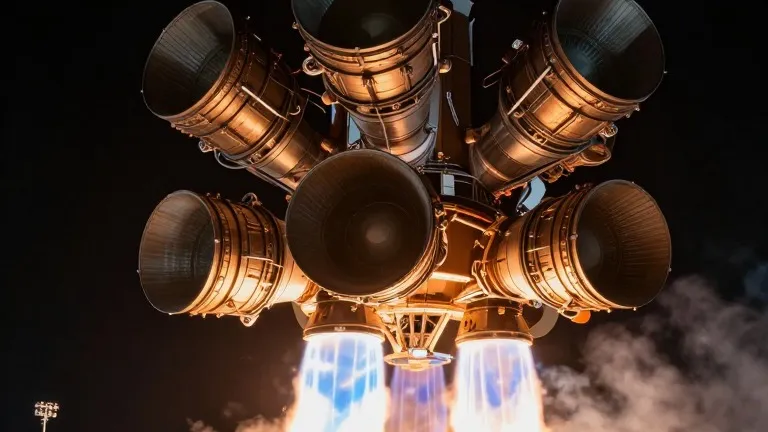
The technical challenge stems from the size of the Starship vehicle. The rocket consumes nearly all of its propellant just to reach Earth orbit, preventing it from traveling to the Moon without external refueling. SpaceX’s proposed solution involves an orbital depot. A Starship configured as a storage tank is launched first, followed by individual tanker Starships that dock and transfer their remaining propellant. Once the depot is full, the lunar lander launches, refuels, and proceeds to the Moon.
The variance in estimates hinges on hardware capabilities and propellant efficiency. NASA’s higher count appears based on Starship’s current lift capacity, while Musk’s lower range assumes a more capable vehicle. Additionally, fuel and oxygen are stored at extremely low temperatures, leading to boil-off losses in orbit and during transfers. Berger estimated that even with a launch rate of two Starships per week by the end of 2027, filling a depot at the panel’s estimate would take about three months.
Musk has previously contested higher launch counts. In 2021, after a government document suggested 16 launches, he described that figure as "extremely unlikely" and predicted eight tankers would be the maximum. The outcome depends on the performance of the upgraded V3 Starship, which SpaceX plans to use for refueling operations. Precourt described Artemis IV as carrying a "large number of firsts," while noting that Blue Origin’s Blue Moon lander does not rely on orbital refueling for its initial mission.
Source: Teslarati