Fighting resumes in Kherson after six-day ceasefire allows civilian evacuations
Hundreds of residents escaped Russian-occupied Oleshky during the war's longest ceasefire, but renewed attacks and Moscow's rejection of further initiatives dimmed prospects for more truces.
By Noah Rao ·
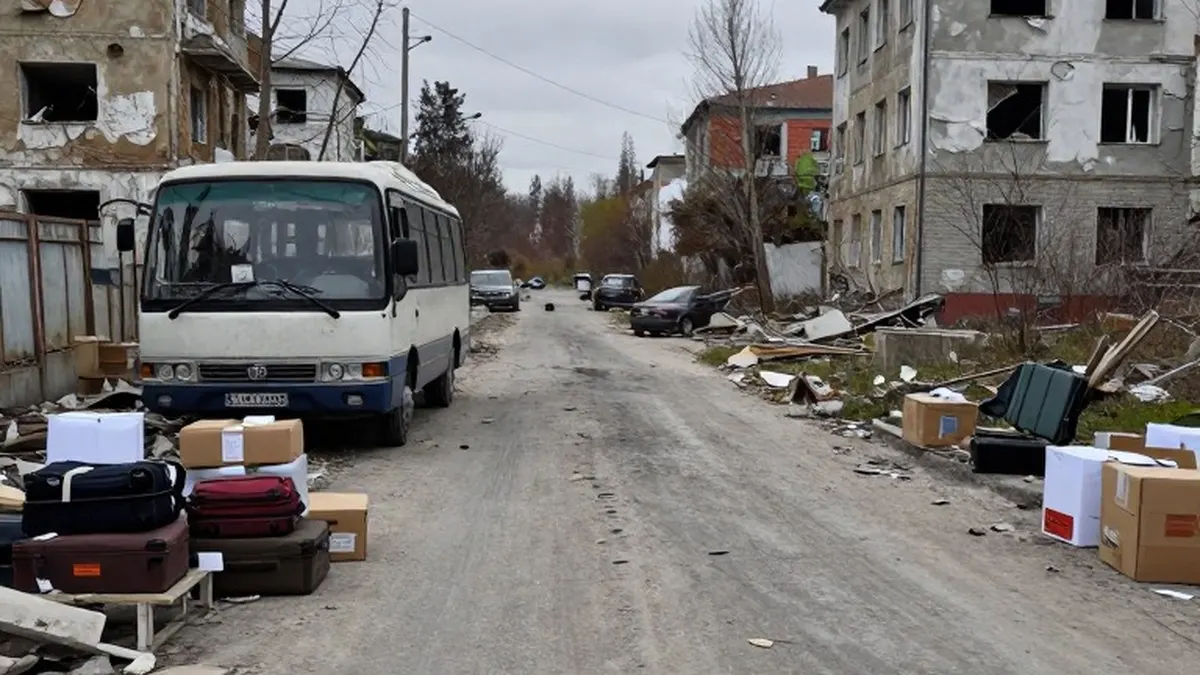
Fighting returned to Ukraine's Kherson region on Monday after a six-day ceasefire enabled hundreds of civilians to leave the Russian-occupied town of Oleshky and nearby areas. The pause was the longest since Russia launched its full-scale invasion in 2022, bringing an unusual period of quiet to a region that has endured years of fighting.
Local authorities said Russian strikes had resumed, with a medical facility in central Kherson among the targets. They also reported that a Russian drone struck a car carrying a 62-year-old woman and a 73-year-old man, injuring both. Elsewhere in Ukraine, Russian air attacks had continued throughout the truce, killing scores of civilians and damaging crucial infrastructure.
Ukraine's General Staff accused Russian forces of taking advantage of the humanitarian pause to reinforce positions, rotate troops and bring in ammunition. It also reported expanded anti-drone equipment along roads. Kremlin spokesman Dmitry Peskov said it was reasonable to assume Ukrainian forces had also used the break to regroup, describing such activity as standard practice in these circumstances.
US First Lady Melania Trump brokered the ceasefire, although details of her role were not disclosed. Both governments repeatedly thanked her. Russia's human rights ombudsman Yana Lantratova and Ukrainian counterpart Dmytro Lubinets supervised the arrangement, visited Oleshky and appeared together in footage speaking with residents. They thanked one another publicly and repeatedly said they had observed no ceasefire violations.
Both officials urged that similar arrangements be pursued elsewhere, while Ukraine said it was also willing to observe a nationwide ceasefire. Moscow rejected the prospect of extending the initiative, describing Oleshky as an isolated case with no bearing on stalled peace negotiations. On Monday, Peskov said: "There are no similar plans or initiatives."
The ceasefire also attracted attention for its political timing, coming shortly before Tuesday's US midterm elections. Some commentators suggested President Donald Trump could present it as a foreign policy accomplishment. Russian state television figure Artyom Sheynin said he understood the importance of creating a success story for the US president before the vote. Ukraine, meanwhile, remains heavily dependent on American intelligence and US-made Patriot air defence missiles as it faces another winter of Russian aerial attacks.
For those evacuated, the pause offered an escape from prolonged hardship. Hundreds of Oleshky residents reached northern Ukraine on Saturday, where some reunited with relatives after years apart. Evacuees described hunger and life in a devastated town to waiting journalists. Lantratova said the hundreds who remained would receive humanitarian supplies every month, an arrangement she also attributed to Melania Trump's mediation.
As attacks resumed in Kherson, Ukrainian drones struck several energy facilities in four Russian regions. Residents in Samara reported explosions and columns of black smoke as an oil refinery was hit for the fifth time in a month. The renewed strikes underscored the continuing conflict beyond the temporary relief provided by the Oleshky evacuation.
Source: BBC News