Eisenkot Challenges Netanyahu's Long Rule in Israel's Divided Vote
Polls show a tight race where opposition blocs may fall short of a majority, forcing a decision on whether to partner with Arab-led parties.
By Diego Ross ·
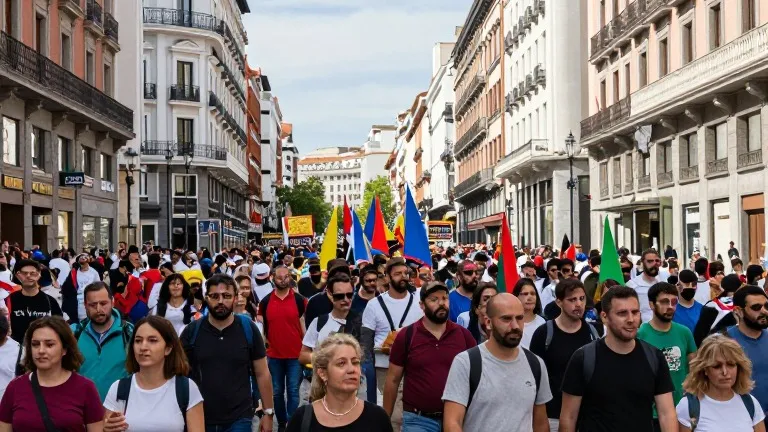
Israelis cast ballots on Tuesday in an election defined less by traditional left-right divides and more by personal allegiance to the prime minister.
Benjamin Netanyahu has served as prime minister for 19 of the last 30 years. The political field is currently split into pro-Netanyahu and anti-Netanyahu camps, with recent polls indicating the two groups are running neck and neck.
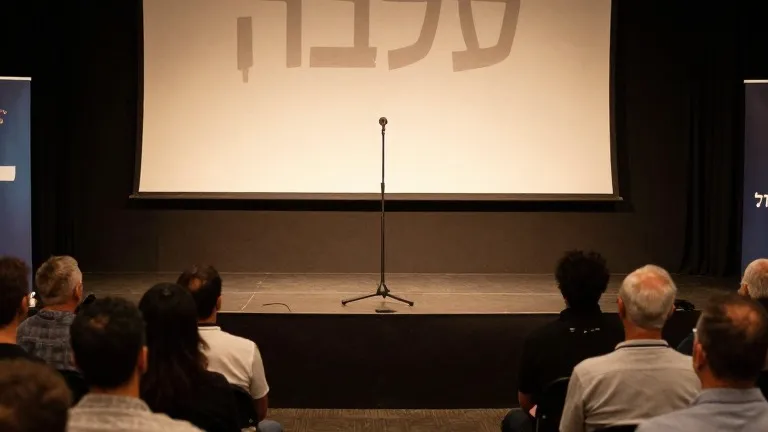
The leading opposition challenger is Gadi Eisenkot, a former military chief of staff who entered politics four years ago. At a rally in Modi'in, attendees praised his direct style. His party, Yashar, which translates to straight or direct, advocates for term limits for the prime minister. Noa Sadeh, a 56-year-old attendee, stated she wants a leader who focuses on action rather than rhetoric.
The opposition coalition includes former prime ministers Naftali Bennett and Avigdor Lieberman. Both men previously held close ties to Netanyahu before falling out with him. On the far right, Yishai Fleisher of Otzma Yehudit argues that Netanyahu has drifted left. He proposed expanding settlements in the West Bank and Gaza, creating a ministry to encourage the voluntary departure of Palestinians, and implementing the death penalty.
Netanyahu's campaign posters frame the choice as a rhyme between Yamin, or right, and Falastin, or Palestine. The opposition faces a strategic dilemma. Polls suggest the anti-Netanyahu Jewish parties may outpoll the prime minister's bloc but will likely lack the 61 seats needed for a majority in the 120-seat Knesset. This shortfall raises the question of whether they will form a government with parties representing Palestinian citizens, who comprise about one-fifth of the population.
Media coverage has played a role in shaping the narrative. Channel 14, a pro-Netanyahu outlet, recently described Eisenkot as a Moroccan monkey. While opponents at rallies mentioned the slur, Eisenkot did not. Some observers viewed his silence as restraint, while others questioned his political instincts. The tight race puzzles many given the context of the 7 October 2023 attacks, the high casualty count in Gaza, and Netanyahu's ongoing corruption trial.
Netanyahu's base remains loyal despite these controversies. His allies argue that intelligence chiefs withheld critical information before the October attacks, a claim that has faced scrutiny. Many expect him to use his coalition-building skills to outmaneuver rivals during post-election negotiations.
Opposition hopes are partly fueled by liberal, secular Israelis returning from abroad to vote. These expatriates are not captured in standard polls and could influence the outcome if the race is decided by a single seat. On Thursday, a state ceremony marked the 31st anniversary of Yitzhak Rabin's assassination. Netanyahu sent a low-ranking minister in his place. Yair Golan, leader of the Democrats, expressed optimism about forming a strategic security agreement, though he avoided using the term peace process.
Source: The Guardian