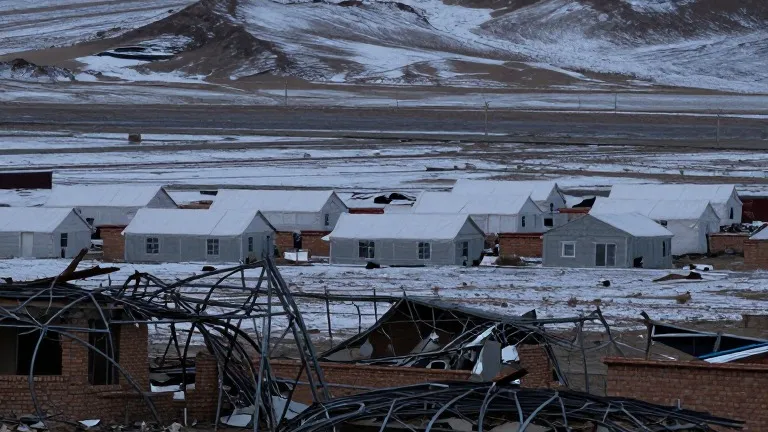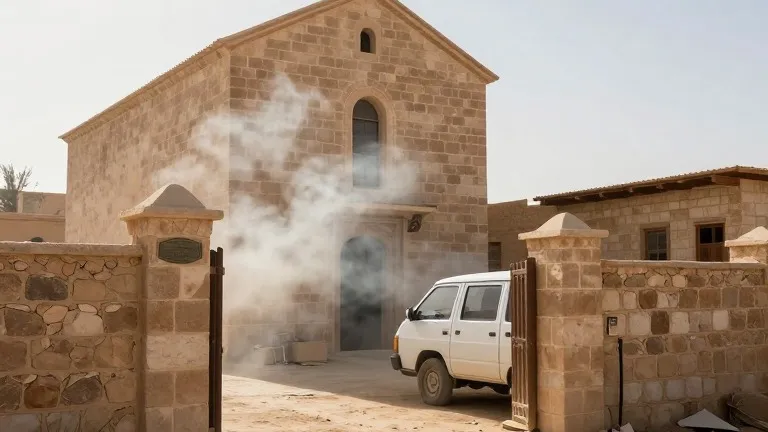
Bulldozers demolish Hebron homes as Israel prepares major West Bank offensive
Prime Minister Netanyahu pledges a military campaign on the scale of the 1967 war after two soldiers were killed in a checkpoint ambush.
By Noah Rao ·
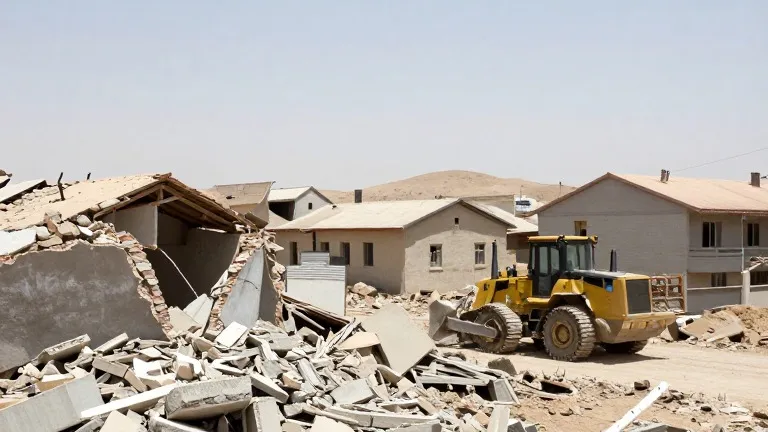
Israeli military bulldozers began flattening homes in a Hebron neighborhood on Friday afternoon. The operation follows an ambush at a nearby checkpoint that killed two soldiers and wounded three others. Prime Minister Benjamin Netanyahu announced a large-scale military operation in the West Bank, stating the campaign would reach a scale not seen since the Six Day War.
Netanyahu delivered a televised address from the site of the attack. He declared that Israel would act to demolish the area and change it completely. The Six Day War occurred almost 60 years ago, when Israel first occupied the territory. Netanyahu compared the current plan to last year's assault on two Palestinian refugee camps in the northern West Bank. That previous operation displaced tens of thousands of people. Human Rights Watch described those expulsions as war crimes, a charge Israel rejects.
Israeli soldiers were positioned behind concrete barriers when two gunmen opened fire. A firefight lasted approximately 20 minutes until troops killed the attackers. The B'Tselem human rights group urged foreign governments to intervene. The group warned of another wave of ethnic cleansing and war crimes if the demolitions continue.
The violence occurs amid a surge in land seizures by Israeli settlers. The United Nations Human Rights Office for the occupied Palestinian territory described the situation as a new level of dehumanization of Palestinians. Israel has imposed widespread closures in Hebron, the most populous city in the occupied West Bank. The country maintains roughly 925 checkpoints, roadblocks, and earth mounds that restrict movement across the territory.
Analysts link the scale of the response to national elections scheduled for October 27. Polls show Netanyahu and his rival, Gadi Eisenkot, running neck and neck. Neither candidate currently holds enough support to form a government. Danny Citrinowicz, a senior researcher at the Institute for National Security Studies in Tel Aviv, said Netanyahu is positioning himself as the security leader. He noted that Netanyahu will take harsh measures to demonstrate he is defending the public.
Citrinowicz called the eviction of families without evidence of a link to the gunmen collective punishment. He argued that preventing future attacks requires giving hope rather than punishing communities. Other analysts view the operation as an effort to stay in power rather than a long-term security strategy. The next major political milestone is the vote on October 27.
Source: NPR