180 Days: Oklahoma Can Revoke a License After a DUI Charge Is Dropped
Oklahoma law separates criminal DUI cases from administrative license revocations, allowing the state to bar drivers from the road even when prosecutors decline to file charges.
By Karim Ramirez ·
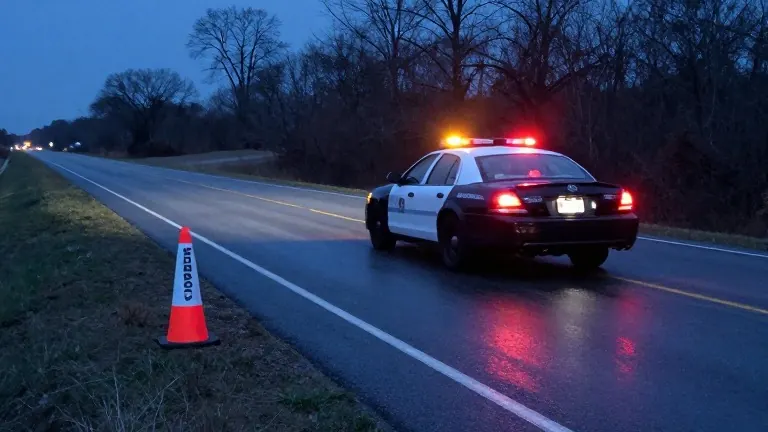
Oklahoma operates two parallel legal tracks for a single traffic stop, and one of them does not require a criminal conviction. A driver can lose their license through an administrative process even if the district attorney decides not to file DUI charges.
Gaylene Ricketts was pulled over in El Reno in late November for allegedly running a stop sign. She consented to a field sobriety test but declined a blood alcohol content test, and was booked for DUI. She went to a hospital after making bond and was treated for a stroke. Several months later, the district attorney declined to file charges due to her medical episode.
Ricketts has nonetheless paid more than $2,000 in fees, completed hours of drug and alcohol abuse counseling, and continues to use an ignition interlock device to start her car. She has no criminal DUI charge, no positive test for drugs or alcohol, and no conviction.
Oklahoma's implied consent law allows the state to test for alcohol concentration upon arrest for road-related offenses. A first refusal triggers a license revocation of at least 180 days. Reinstatement requires completing the Impaired Driver Accountability Program and an alcohol and drug substance abuse course, all separate from any criminal penalties.
The two tracks use different standards of proof. Criminal prosecutors must prove a case beyond a reasonable doubt. For administrative consequences, officers need only show reasonable grounds to believe a person operated a vehicle while under the influence. Michael Smith, a University of of Oklahoma law professor and former prosecutor, said defendants and agencies often fail to distinguish which rules apply to which proceeding. "I do find that a conviction or even an arrest can come with a lot of these administrative consequences that prosecutors aren't often aware of because those are sort of unrelated to the criminal proceeding," Smith said.
Brian Morton, a driver's license attorney, said the gap between the two standards can produce contradictory outcomes. "So you may have a DA that looks at a case and goes, 'I can't prove this beyond a reasonable doubt,' but the Service Oklahoma standard is much less," Morton said. Service Oklahoma, created by the legislature in 2022, handles license revocations and licensing services across the state. Christina Dukeman, its director of communications, said a decision not to file criminal charges does not automatically resolve a separate license action. A petition against a revocation must be filed within 30 days, and missing the deadline waives the right to a court hearing. Ricketts said she was awaiting the criminal case outcome during her 30-day window.
Forty-nine of the 50 states impose separate penalties for refusing a blood alcohol content test under implied consent laws. Wyoming repealed its implied consent law in 2011 and now uses a no-refusal policy that allows officers to obtain a warrant from an on-call judge; refusal after a warrant can lead to obstruction of justice charges. Alaska and Minnesota treat a refusal as a misdemeanor. Tennessee allows officers and medical professionals to use force with a warrant, and raised its first-offense revocation for a refusal to 18 months this year, compared with Oklahoma's 180 days.
Ricketts, a two-time cancer survivor who previously had a stroke, said she declined the test because of her medical history and medication concerns. The officer's affidavit stated she admitted to taking a muscle relaxer; Ricketts said the medication was only in her purse. "The entire process is upside down and backwards," Ricketts said. "The facts should determine the outcome of the administrative process, too."
A state education document on implied consent law states criminal litigation is more serious than civil litigation and grants criminal defendants more rights and protections. Smith said the lower safeguards for license actions reflect that a revocation is less of a deprivation than a loss of liberty or money. He said implied consent law is overbroad and that lawmakers, including in Oklahoma, appear comfortable with it. "It can lead to outcomes that are kind of overbroad given the goals," Smith said.
Source: Oklahoma Watch