Sudan's Fuel Crunch Forces 40% Fare Hikes and Squeezes Worker Wages
Rising transport costs are cutting into the incomes of drivers and cleaners as the country battles supply shortages and war-related damage to oil infrastructure.
By Karim Ramirez ·
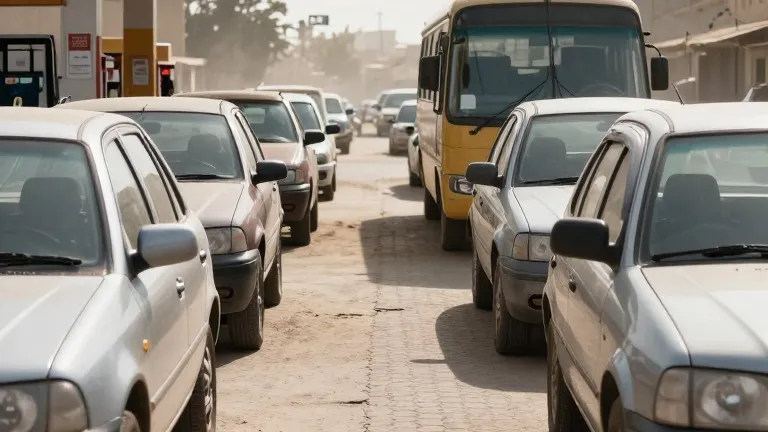
Sudan’s Transport Chambers Union increased intercity bus fares by 40 percent and minibus fares by 30 percent this month to offset soaring fuel costs. The adjustment lands on commuters whose travel budgets are already stretched thin by the ongoing conflict and rising prices for basic goods.
The price of petrol has climbed sharply due to scarcity. In Gazira State, south of Khartoum, a gallon costs 40,000 Sudanese pounds, while in Port Sudan it is 35,000 pounds. At the parallel-market rate, these figures equate to $4.30 and $3.80 respectively. Drivers report that fuel is often unavailable, forcing them to wait in lines that can last five hours or more.
Azhari Mohamed, a 60-year-old minibus driver in Port Sudan, works seven round trips daily between the Shagar neighbourhood and the city centre. His vehicle consumes 11 litres of petrol each day, costing him 105,000 pounds. After paying operating expenses, he earns roughly 50,000 pounds, or $5.40, to support his family. He now spends one day in three waiting for fuel, reducing his effective working time.
For passengers, the fare hikes represent a major cut to daily wages. Aziza Ibrahim, a 38-year-old cleaner in Port Sudan, reduced her working schedule to three days a week to manage transport costs. Her round trip to the city centre now requires 11,000 pounds, consuming nearly half of her 400,000-pound monthly salary. She often borrows money to reach work, repaying the loan when she receives her pay.
The United Nations Development Programme states that average incomes in Sudan have fallen to levels last seen in the 1990s. The war between the Sudanese Armed Forces and the Rapid Support Forces, which began in April 2023, has disrupted the economy. The Ministry of Energy and Petroleum estimated war-related losses at $20 billion last year.
Supply disruptions are compounded by attacks on the Balila oil field, which previously fed the Khartoum refinery responsible for 60 percent of national petrol and liquefied petroleum gas demand. With domestic output reduced, Sudan relies on imports during a period of high global energy prices. Economic analyst Sidi Ohaj noted that strict import rules, including a 200kg gold deposit requirement, have forced some importers out of the market, reducing supply relative to demand.
Businesses face similar pressures. Ahmed al-Haj, a trader in Omdurman, reported that the cost of moving a tonne of goods has risen by 30 to 50 percent. Local delivery fees in Omdurman have doubled from 5,000 pounds to between 10,000 and 12,000 pounds. Many traders now struggle to reach customers in other states, causing goods to accumulate at their premises as transport workers make fewer trips.
Source: Al Jazeera