Sri Lanka's Largest Elephant Dies, 370 Killed Yearly in Farming Clash
Kavantissa, an 11-foot tusker treated by vets after a leg wound, joins annual death toll on island holding 10% of Asian elephants.
By Noah Rao ·
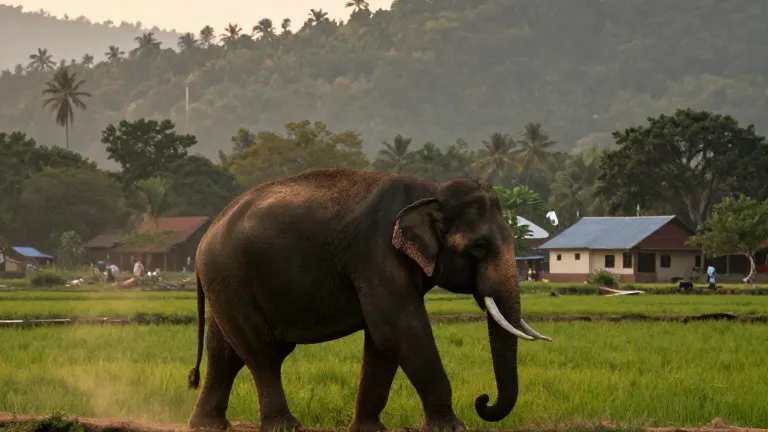
Kavantissa, a 45-year-old male elephant measured at 3.3 meters tall, died on October 16 after treatment for a gunshot wound to his right leg. The animal, which weighed about 5,500 kilograms, lived near Galgamuwa in northwestern Sri Lanka and was widely watched by residents there.
Villagers reported the animal limping in late September, and veterinary surgeons later found the wound. He did not recover. Wildlife officials recorded about 7,451 wild elephants across Sri Lanka in 2024, and roughly 70% of them stay outside protected areas.
Sri Lanka holds about 10% of the world's Asian elephants on land that makes up 2% of their natural range, according to the source material. The island reports more elephant deaths each year than any other country, and the second highest human death count worldwide from encounters between the two species. Since 2019, averages show 370 elephants and 125 people die annually in such incidents.
Ravi Corea, president of the Sri Lanka Wildlife Conservation Society, attributes the violence to habitat loss, agricultural expansion, fragmented elephant corridors and competition for land. He notes that crop losses can threaten a rural family's food and income supply, which sets this conflict apart from wildlife disputes in wealthier nations.
The rural population grew from 8.25 million in 1960 to 17.8 million in 2020, and farming remains the main rural income source, driving continued clearing of land. Each elephant needs roughly 150 kilograms of green matter daily, which pushes animals toward fields. The Sri Lankan elephant is classified as an endangered subspecies on the IUCN Red List and protected by national law, though experts report animals are shot, poisoned, hit by trains or killed by explosives hidden in food.
Community projects in the Wasgamuwa region are attempting to ease contact. Project Orange Elephant asks farmers to grow citrus, which elephants avoid, reducing crop raids and adding income. Electric fencing protects some settlements and farmland. The EleFriendly bus service carries schoolchildren through elephant corridors and has cut dangerous encounters on its original route by more than 90%.
Kamal Shashendra, an environmental ethics researcher in Sri Lanka, said any resolution must protect human lives, livelihoods and elephant populations together. He calls for scientifically informed land-use planning, protected corridors, community-based fencing, early-warning systems and fair payments for affected families.
Source: Deutsche Welle