Spain's €14.70 Lunch Menus Shed Four Million Daily Servings
The menú del día, a fixed-price midday meal of starter, main and dessert, is served about 4 million times each weekday as rising costs thin the ranks of restaurants offering it.
By Karim Ramirez ·
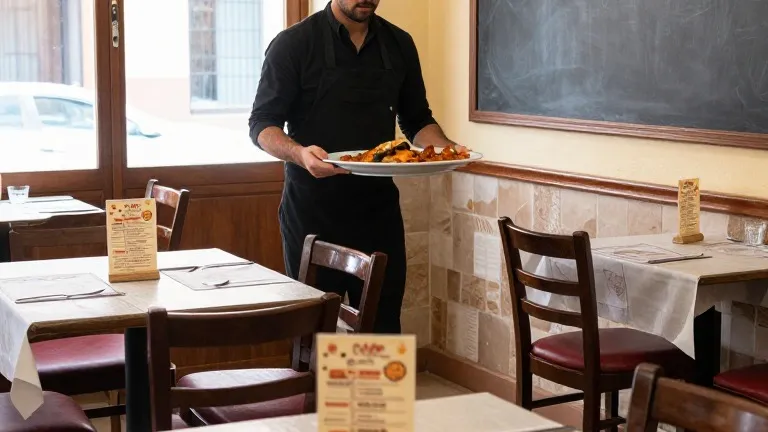
The midday meal in Spain has long followed a fixed pattern: a starter, a main course, a dessert, bread and a drink, all at one posted price.
In working districts across the country, chalkboards and taped paper sheets still advertise this menú del día before noon, and about 4 million of the meals are served each weekday. The average price now stands at €14.70, and the habit is contracting. Spanish food journalist Lakshmi Aguirre traces the tradition's history in her book Menú del Día: Everyday Scenes of a First Course, a Second Course and Pudding, arguing that the format is in trouble but not finished.
The menú began in the mid-1960s as a tourist menu designed by Manuel Fraga, the information and tourism minister under dictator Francisco Franco. After the years of hunger that followed the Spanish civil war, the regime wanted foreign visitors to encounter plentiful, affordable food. Regulations required a soup starter, a main of egg, fish or meat drawn from at least three options with a side dish, and a dessert of fruit, something sweet or cheese. Prices were set between 50 and 250 pesetas. The accompanying quarter-litre of wine had to be clean Spanish red or white with at least 12% alcohol. In the early 1970s the offer was renamed to look less like a draw for tourists and to encourage ordinary Spaniards to order it.
In 2009, Spain's best-known chef, Ferran Adrià, declared the menú dead, citing changing eating habits, economic downturn and bistros charging €20 to €30 for a starter, main and dessert with bread and a drink. Seventeen years later, the format still exists.
Aguirre said many people she spoke with while researching the book did not know Fraga's role. When she mentioned his name, she said, many threw their hands up in shock. "It says a lot about us Spaniards; we forget very quickly," she said. She described the menú as part of the country's history and said nostalgia is growing as people realize it is fading.
Energy and food costs have risen, making it harder for small, family-run restaurants to rotate a daily choice of dishes. Some now offer a single dish of the day. Others have added Latin American staples to reflect changes in Spain's population. Many people short on time bring food from home or heat a supermarket ready meal instead.
Aguirre accepts these changes, saying the menú has always mirrored the society that eats it. Her test for a venue includes simple dishes, a menu that changes often, chips that are not frozen, regular customers, and a chalkboard free of words such as avocado, burrata, tartare, truffle or sourdough bread.
"What's being lost is a meeting point," she said, describing a place where families with limited means can eat out and people living alone find company. The true privilege of the menú, she added, lies "not just in being able to pay for a meal, but also in having the time to enjoy it".
The average price of the set lunch now stands at €14.70, and about 4 million servings are still ordered each weekday.
Source: The Guardian