Somalia Floods: Airstrikes Force Families Into Swollen River Basins
Residents of Jilib report that US military operations are driving civilians toward the Juba River just as El Niño conditions threaten major flooding.
By Karim Ramirez ·
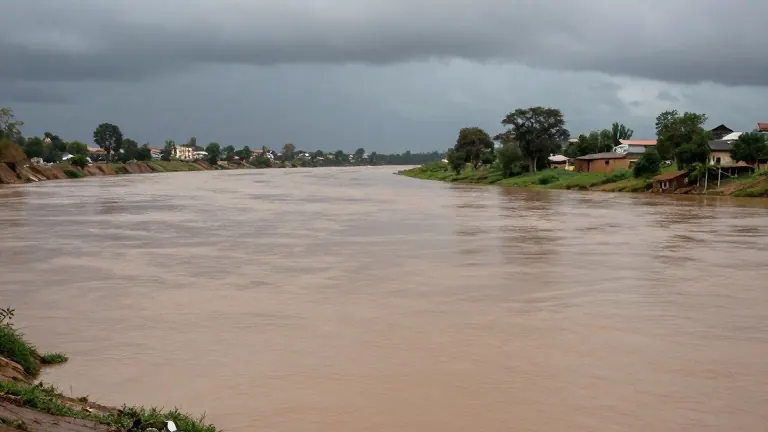
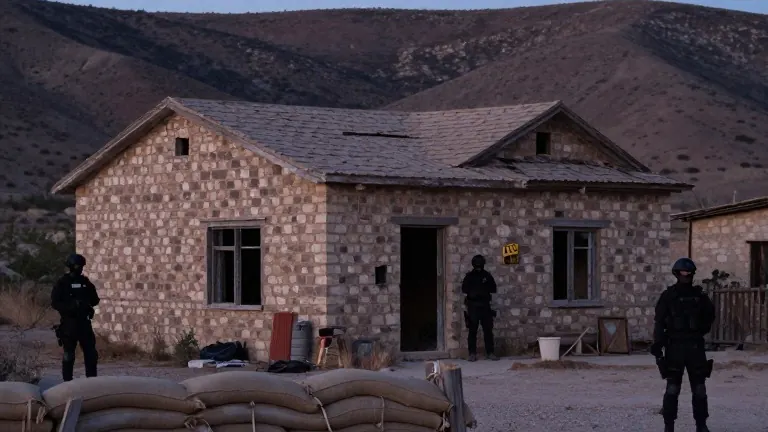
Southern Somalia faces a convergence of military conflict and climate crisis that is trapping civilians in a dangerous corridor. Families in the Jilib district, a key area held by al-Shabaab, report that repeated airstrikes are pushing them toward the banks of the Juba River. This movement occurs just as rising waters from the El Niño weather pattern threaten to submerge the low-lying areas where many now shelter.
Local residents describe a pattern of strikes that leaves little room for safe movement. Cayni Ali, a mother of six, reported that water had reached her waist at her home, which sits five meters from the river. She stated that drones arrive frequently and that both livestock and people are being killed. Asho Omar from the nearby village of Malenda described the attacks as constant, making it difficult for residents to move their families to higher ground.
The United States Africa Command, or Africom, coordinates these operations in the region. The command declined to provide specific details about the campaign, which appears to be accelerating. Some observers argue that the timing of the strikes exploits the flooding. One source monitoring the Juba floodplain suggested that El Niño conditions are being used as a tool to drive the population into dangerous zones. Many of those displaced are women and children, increasing the risk of death in the coming months.
Africom has rejected the notion that weather is a tactic. A spokesperson for the command stated that the force targets lawful military objectives and takes feasible steps to limit civilian harm. The spokesperson also said the military does not target civilians or use flooding as a method of warfare. Jethro Norman of the Danish Institute for International Studies called the potential use of remote sensing to inflict casualties a reversal of standard humanitarian processes.
The physical threat of flooding is well-documented. The previous El Niño event in 2023 caused the worst floods in a century, displacing more than 1.2 million people. United Nations agencies identify the Juba River basin as an area of particular concern. The International Committee of the Red Cross expects severe flooding in the region. Arbey Famu, a resident of Ahmed Yare, said her maize and sorghum crops were already underwater.
Preparation efforts remain limited. Ali Adan Ali, the commissioner for displaced people in Jubaland, identified 327 flood-prone regions. By October, only half of those areas had received warnings about the incoming El Niño. He expressed concern over a shortage of boats, which could prevent thousands on the east side of the river from reaching help in Kismayo. During the 2023 floods, he noted that 19,000 people were stranded for a week without food.
Official records do not always match local accounts of the strikes. Farhan Ahmed, who left Jilib last month, said airstrikes happened daily and that one attack flattened five homes in his neighborhood. US records confirm one strike in Jilib in August and six in September, for a total of 11 strikes since early August. The US stated it publicizes all strikes under its authority. David Sterman of the New America thinktank noted that unclear attribution raises the possibility of covert operations.
The strain on healthcare systems is measurable. The ICRC treated 205 patients for weapon-related injuries in Kismayo this year, a 43 percent increase from last year. Hunger compounds the danger for those displaced. Zakaria Mohammed, a head nurse at an ICRC-supported hospital, reported a 40 percent rise in child malnutrition cases this year. Shukri Ahmed, president of Galbeed refugee camp, estimated that 6,000 people may have died in Kismayo displacement sites since the US Agency for International Development was shut last year.
Individual stories illustrate the severity of the situation. Xaawo Nacdoor fled her home at night after al-Shabaab blocked her from seeking treatment. She carried her 14-month-old daughter, Faadumo, for three days. The child weighed 4.1 kilograms on arrival and 4.4 kilograms three days later, and she survived. Most patients in the area say they will not return home due to the lack of schools, healthcare, and food under al-Shabaab control.
Source: The Guardian