
Iran Hints at Wider Military Reach, Raising the Specter of Strikes on Europe
A statement attributed to Iran's supreme leader telling forces to answer any attack with 'no geographical restriction' has fueled speculation that Tehran's missile ambitions may now extend to US assets in Europe.
By Diego Ross ·
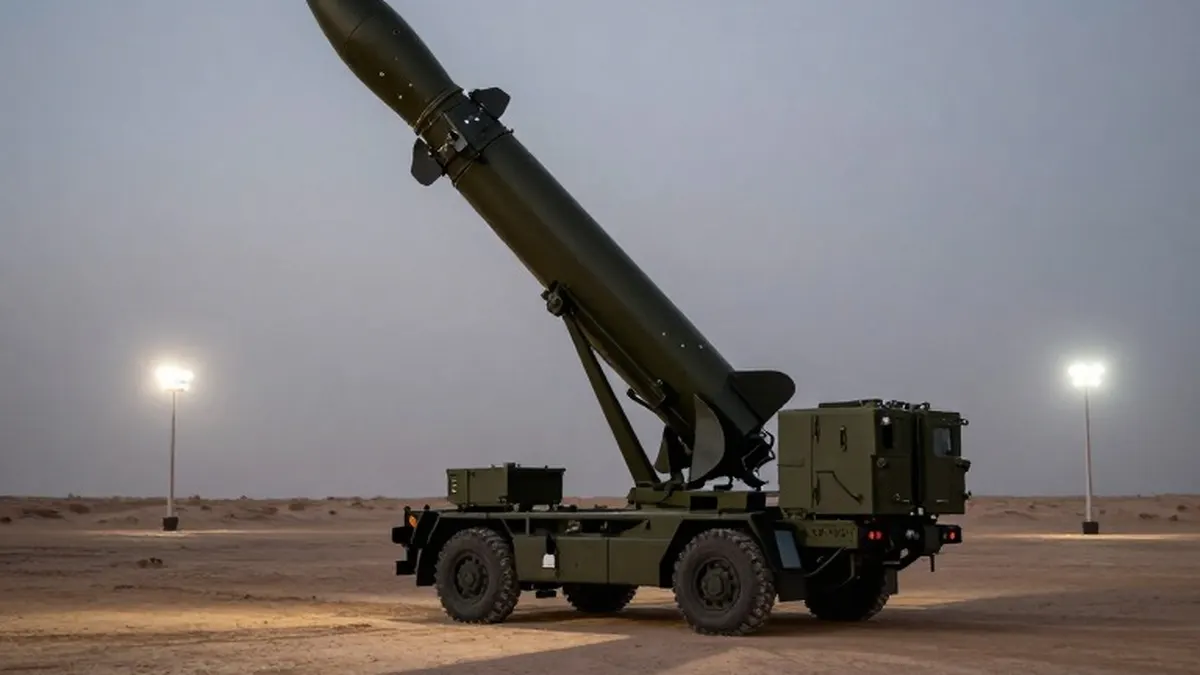
Iran is signaling that any renewed war with the United States and Israel could reach far beyond the Middle East, with a new supreme leader directive and senior figures pointing to targets as distant as Europe.
In an October 31 statement attributed to Supreme Leader Mojtaba Khamenei, the armed forces were ordered to be ready to respond to an attack "immediately, effectively, and with no geographical restriction." That last phrase has fueled speculation in Iran about what it entails and whether Tehran can deliver.
The warning comes as Iran and the United States trade threats while pursuing diplomacy, with possible escalation after the US midterm elections still looming. When Washington and Israel first attacked Iran on February 28, Tehran struck military and civilian sites in Arab states across the Persian Gulf, saying it was targeting US interests. Analysts say Tehran hoped regionalizing the conflict would push Washington to halt its attacks.
Some in Tehran suggest that if the war reignites, as Trump has threatened, it will go further. Conservative lawmaker and former foreign minister Manuchehr Mottaki told state television that the next conflict "will not be a regional war" and "will reach Europe." Conservative commentator Ali Qolhaki wrote on X that expanding the target list beyond the region likely meant Europe, pointing to Britain, Italy, Greece and Germany, which host US forces and form part of Washington's global military deployment and logistical support network.
Iranian media have framed the statement as a sign that missile policy may be shifting. Iran has held a 2,000-kilometer range limit for years, a cap the late supreme leader Ayatollah Ali Khamenei said he imposed despite objections from military figures. Some outlets suggest the younger Khamenei, unseen in public since the February 28 strikes that killed his father, is lifting that cap, and the semiofficial ISNA news agency said it pointed to a redefinition of how far the armed forces are prepared to strike.
The Young Journalists Club, affiliated with state broadcaster IRIB, said Iran's target list had been updated and its deterrence now extended "beyond the region." Citing at least 128 US military bases and facilities in 51 countries, it said "the aggressors' bases anywhere in the world" were now on the target list.
Danny Citrinowicz, a nonresident fellow at the Atlantic Council, said Tehran is preparing to respond forcefully to an American-Israeli attack expected to be "particularly broad and violent." Iran appears to be expanding its target bank to assets not hit in previous campaigns, including communication infrastructure and strategic assets in Gulf countries, he said, and the next campaign "could be far broader, longer, and more grueling than Washington hopes."
Not everyone is convinced. The reformist daily Etemad cautioned that calling for longer-range missiles, having the technical capability to build them, and formally deciding to change course are three different things. Jeremy Binnie, a Middle East defense analyst at intelligence company Janes, said the reference to geographical restrictions might not be about distance at all: Iran may have an agreement with one or more Arab Gulf states not to target them, "a restriction that could be lifted."
Binnie said Iran has been able to extend missile range beyond 2,000 kilometers "for some time," since range grows when warhead weight is reduced. The most obvious candidate is the Khorramshahr, unveiled in 2017 and called "their most powerful missile" by Binnie, estimated at 3,000 kilometers with a small 750-kilogram re-entry vehicle. The old limit "made some sense," he said, because it let the Islamic Revolutionary Guards Corps reach "pretty much everything it would need to target in the region" without threatening Europe except Cyprus and some Greek islands. The most obvious target beyond that range would be Diego Garcia, the joint US-British base in the Indian Ocean nearly 4,000 kilometers from Iran. Britain said Iran tried and failed to hit the base on March 20, though at least one Iranian official denied the attempt.
Source: RFE/RL