Merz's Call for Korean Unity Highlights Fading Support for Reunification
The German chancellor's appeal at the Korean border contrasts with growing skepticism in South Korea, Pyongyang's rejection of unity and major strategic obstacles.
By Karim Ramirez ·
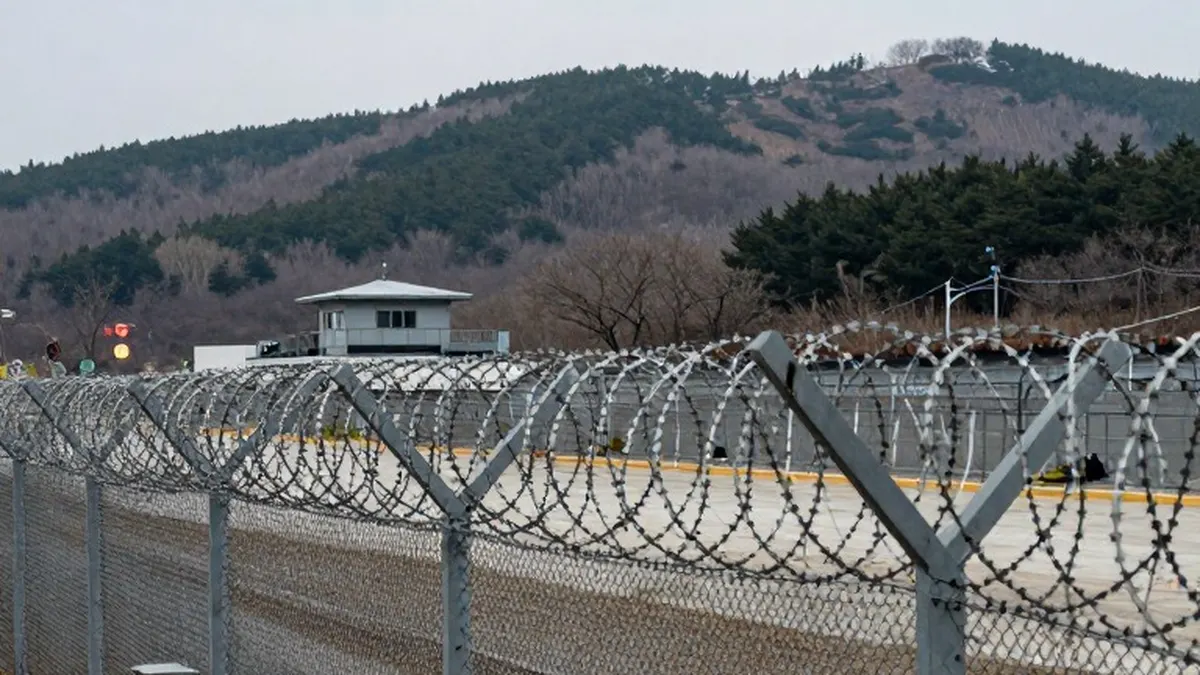
German Chancellor Friedrich Merz's appeal for Korean reunification during a visit to the Demilitarized Zone on Friday highlighted the distance between Germany's experience and prospects on the Korean Peninsula. His message echoed hopes voiced by Chancellor Helmut Kohl during a 1993 visit, but analysts say political resistance, economic disparities and competing international interests leave unity a distant possibility.
In a social media message, Merz invoked Germans' understanding of national division and their experience of overcoming it through commitment to their values and dialogue. “We wish the people in Korea unity in freedom,” he said. Despite their shared language, history and cultural heritage, North and South Korea remain separated by sharply different political systems, economies and strategic alliances.
Public attitudes in South Korea have shifted, particularly among younger generations, according to Choo Jae-woo, a foreign policy professor at Kyung Hee University. He told DW that younger South Koreans often regard the North as a poor, threatening neighboring country, without the emotional connection felt by older people. A September study by Seoul National University's Institute for Peace and Unification Studies found that 39.1% of South Koreans considered reunification impossible, the highest share since the survey began roughly two decades ago.
The financial burden is another concern, including the cost of developing North Korea's roads, hospitals, schools and other infrastructure. South Korea's constitution continues to prescribe peaceful reunification founded on freedom and democracy. However, Choo said recent governments have given the objective less prominence than their predecessors.
Pyongyang has taken a more explicit position against unity. Choo said North Korean leader Kim Jong Un announced in December 2023 that peaceful reunification was no longer possible and that constitutional changes would define South Korea as a hostile rival. The revised constitution received approval in March 2026, and the regime has pursued the removal of references to reconciliation and national unity.
Mason Richey, a professor of politics and international relations at Hankuk University of Foreign Studies in Seoul, said the North had clearly signaled its unwillingness to move closer to the South. A unified democratic system would threaten the ruling regime's power and prestige. Closing the economic gap would also place enormous pressure on South Korea, even with outside assistance, he said. East Germany in 1990 was substantially more developed than North Korea is now.
International rivalries create further obstacles. Choo pointed to South Korea's alliance with the United States and North Korea's ties to China and, increasingly, Russia. Washington would oppose a unified Korea aligned with Beijing, while China would resist the prospect of US forces reaching its border through reunification. Choo described the existing arrangement as imperfect but the best means of maintaining regional stability. Still, economic, social and security conditions could change substantially over a decade, leaving the longer-term outcome uncertain.
Source: Deutsche Welle