
Kazakh Germans work to preserve memories of Soviet deportation and forced labor
A young Kazakh German is using theater and film to remember Soviet repression as researchers encounter limited interest in confronting Kazakhstan's Gulag history.
By Diego Ross ·
For Yunna Kinereish, preserving the history of Kazakhstan's ethnic Germans is a personal responsibility. The 22-year-old public relations student in Astana identifies with both her German ancestry and her Kazakh upbringing. Through theater and filmmaking, she is helping tell the stories of families, including her own, who endured Soviet deportation and imprisonment.
Kinereish is among Kazakhstan's 223,000 ethnic Germans and belongs to the Wiedergeburt, or Revival, Association of Germans in Kazakhstan. She recently performed in its youth theater, portraying the experiences of her Russian German ancestors. Her family was expelled from Kleinwärter, an ethnic German settlement in Ukraine. Bringing such accounts to the stage, she told DW, was deeply emotional.
The community's history stretches back to the 18th century, when Germans were encouraged to settle in the Russian Empire, including the Black Sea region of Ukraine. Following Nazi Germany's invasion of the Soviet Union in 1941, Josef Stalin ordered mass deportations of ethnic Germans to Siberia and Kazakhstan. Soviet authorities branded innocent people as spies and collaborators. More than a million were deported, and at least 200,000 died from expulsion, hunger and forced labor.
In Astana, the association operates from the House of Friendship, a center for German culture financed mainly by Germany's government. Alongside language classes and social work, it supports remembrance of Soviet deportation and repression. Kinereish extended that work to film in 2025, documenting German women held at ALZhIR, the Akmolinsk Camp for Wives of Traitors to the Motherland.
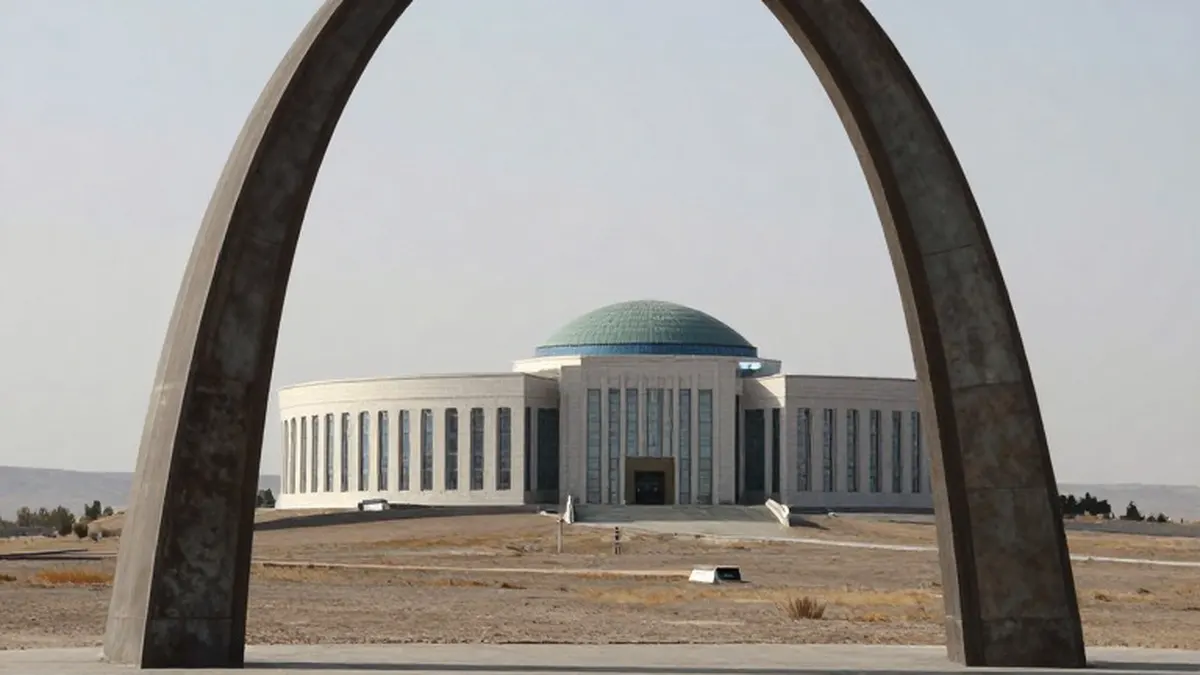
During the Great Terror of the 1930s, the Soviet Union established its largest camp system in Kazakhstan. Some 18,000 women passed through ALZhIR, imprisoned because their husbands had been convicted as traitors or enemies of the people. They included 167 ethnic German women whose experiences feature in Kinereish's film. The memorial outside Astana displays prisoners' belongings, documents, photographs and models of their basic accommodation.
Among those remembered is Gertrud Platais, a print worker from Lower Silesia, now part of Poland. After marrying Karl Eduard Platais, she became a Soviet citizen. Her husband's arrest in 1938 led to her own conviction as a traitor's relative. At ALZhIR, she was forced to embroider until 1946, enduring a region with summer temperatures of 40 degrees Celsius and winter temperatures of minus 40. She was then banished for life to Karlag and was rehabilitated in 1956.
Karlag, the Karaganda Corrective Labor Camp, combined imprisonment with an enormous agricultural and economic operation. Almost one million people passed through it between 1931 and 1959. Around 10,000 prisoners are believed to have died between 1940 and 1950 alone from hunger, cold, illness and forced labor. Its museum occupies the former administration building near Karaganda, approximately 250 kilometers south of Astana.
Katherine M. Erdman, an American anthropologist and archaeologist at Nazarbayev University, has spent about a decade researching the Gulag. With students, she has used drones, interviews and field research to locate former camps and identify their surviving traces. Their findings show how forced labor shaped landscapes, factories and homes. Yet sharing those discoveries with residents and local authorities often brings indifference or rejection, she says.
Erdman describes limited public and political interest in confronting that history, despite a desire to show the international community that Kazakhstan is addressing it. Kinereish remains determined to keep her family's experiences alive. As she told DW: "My ancestors survived the Gulag system in Kazakhstan." Passing their suffering and survival on to younger generations is central to her work.
Source: Deutsche Welle