'Death is closer than school': Yemen's children struggle with war trauma
As fighting grips Taiz governorate, children across the region are showing deep psychological scars while access to mental health support remains far out of reach.
By Noah Rao ·
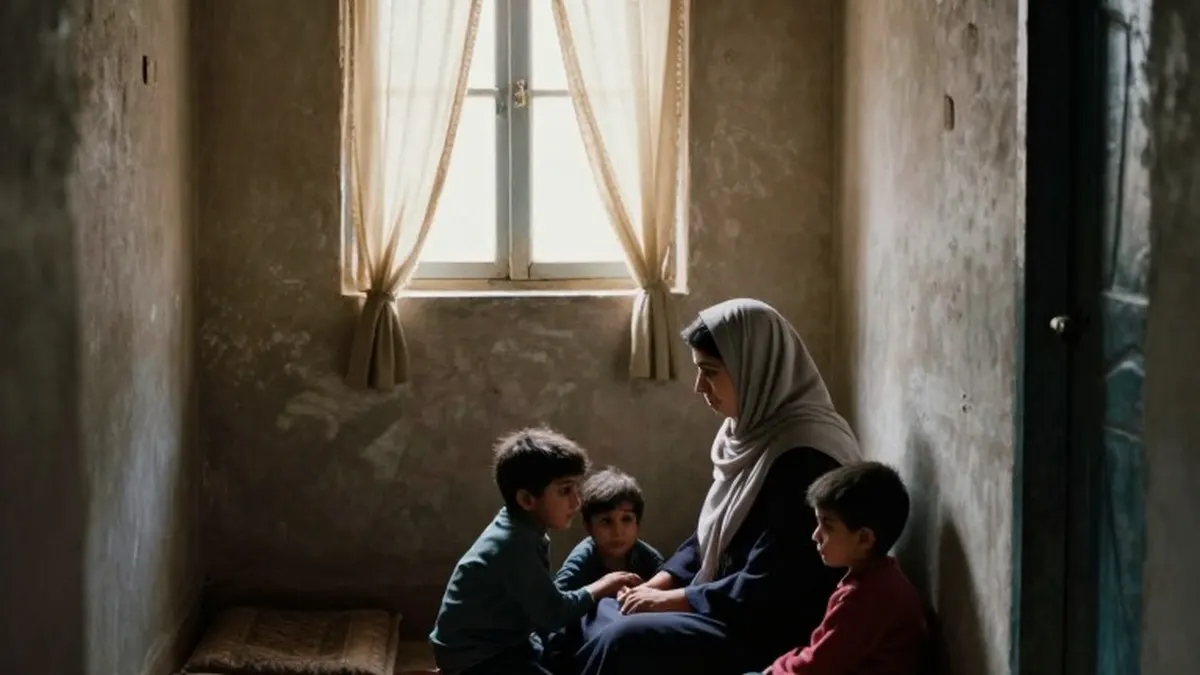
When clashes reached Taghreed Abdulellah's village, about 30km from Yemen's Taiz city, in October, the mother of three had no chance to flee. Battles had already erupted around her home, so she gathered her children, aged four, seven and 10, into a hallway to shield them from blasts and shrapnel coming through the windows. Their father was away, and when an explosion went off right near the house, the children cried in terror for hours. "I couldn't stop them from crying; in fact, I broke down and joined them at times," she told Middle East Eye.
The fighting raged near the family for four days before moving away, but Abdulellah says her children's lives have changed completely for the worse. The two youngest now suffer from bedwetting, while the eldest speaks constantly about being killed rather than thinking about his studies. The children, who once slept in their own room, now refuse to sleep alone, and the whole family shares one room. Nightmares disturb them every night, and by day they refuse to step outside, convinced they will be killed or injured if they leave the house.
Public schools across Taiz governorate, in the city and rural areas alike, have been closed since 4 October because attending them is no longer safe. Shelling and air strikes have hit almost every district, making outdoor play dangerous as well. On 4 October, Houthi forces advanced into large areas of the governorate, seizing most of it and cutting off the roads into Taiz city. Fighting continues around the city and in rural areas as the Houthis, officially known as Ansar Allah, push toward Lahij governorate, while Saudi-led air strikes target Houthi positions around Taiz.
The human cost has been severe. The World Health Organization reported that 1,677 people were killed and more than 7,395 injured across Yemen between August and late October 2026 amid renewed clashes between government forces and the Houthis. Mazen Aqlan, executive manager of the Taiz Human Rights Centre, told MEE that 19 children were killed and 49 injured in Taiz governorate in October alone.
In Taiz city, 13-year-old Odai has seen his own life transformed. He once spent mornings at school and afternoons playing with friends, but since 4 October he has spent most of his time scrolling through his phone, viewing images of violence and hearing adults recount what happened in 2015 when fighting reached their neighbourhood. "Life isn't easy, and death is close to everyone," he told MEE. "We were focused on our studies and weren't aware that a person could lose their life in a single minute."
The seventh grader, who seems mature for his age, now thinks more about the afterlife than his education. Asked whether his priority should be studying, he laughed and replied: "Studying is important, but there is no guarantee we will stay alive until schools reopen. Death is closer to us than resuming our education." His father, a man in his 50s who asked not to be named, said Odai was not like this until last month, when he heard about a child killed in the city and saw related photos and videos. "Mobile phones and the stories they hear from friends leave a severe psychological impact on children," he said, adding that the best solution would be immediate psychological support from local authorities and organisations.
The gap between need and support is vast. Aqlan told MEE that more than 100,000 children in Taiz governorate have witnessed the horrors of war and urgently need psychological care, singling out families who lost loved ones, had homes shelled or were displaced. In mid-September, before the latest escalation, Unicef reported that over 57,000 children had been displaced in just two weeks, and the UN said earlier this year that 12.2 million children nationwide needed humanitarian assistance. On Sunday, the Social Affairs and Labour Office in Taiz said humanitarian organisations provided psychosocial support to 719 children, while 219 boys and girls received psychological first aid sessions.
Psychologist Saba al-Sabri, who works with several support institutions in Taiz, said clear behavioural changes have emerged over the past month, including continuous fear, nervousness, bedwetting, clinging to parents even during sleep, and a total loss of motivation to learn because children believe they will die or become disabled. She said counselling sessions remain far too few compared to a need that has persisted for over 11 years, warning that some parents focus only on survival and overlook trauma. "Ignoring a child's feelings and failing to sit and communicate with them leaves a deep negative impact on their well-being," she said.
Abdulellah believes strongly in psychological treatment but cannot access it. "If psychological treatment were available, I wouldn't hesitate to take my children. But we are in a time of war, and it is hard to access such services since they are usually only available in the city," she said.
Source: Middle East Eye