
NATO tests faster drone defenses and AI-assisted targeting in Latvia
Exercises in Latvia brought together NATO digital networking, counter-drone and targeting initiatives as the alliance seeks to accelerate military innovation.
By Karim Ramirez ·
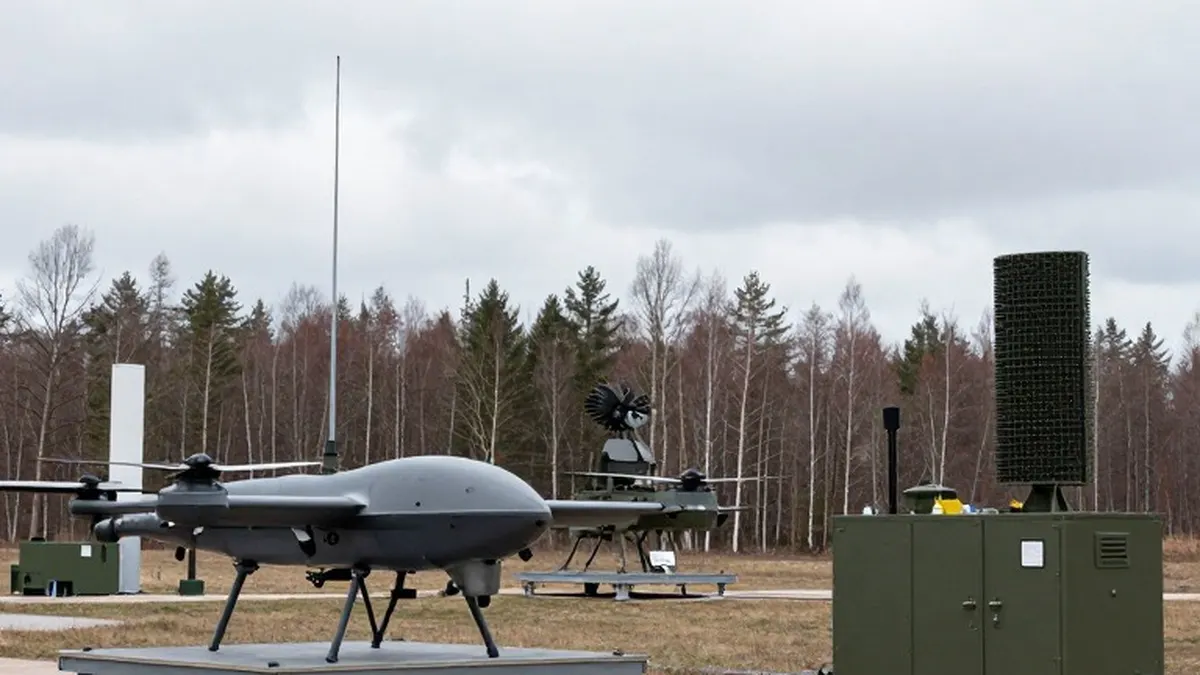
NATO is accelerating efforts to develop connected drone defenses and AI-assisted targeting as inexpensive unmanned aircraft and fast-changing battlefield technology challenge traditional military development schedules. At NATO FUSE in Latvia on October 29 and 30, the alliance tested ways to improve coordination and shorten the time needed to turn information into decisions.
Organized by Allied Command Transformation, the event combined the Digital Backbone eXperimentation program, known as DiBaX, the Layered Counter-UAS Initiative, or LCI-X, and Next Generation Targeting, or NGT. Military organizations, operators and industry gathered to evaluate concepts and collect evidence under realistic conditions. The exercises were intended for experimentation rather than procurement.
Maj.-Gen. Arnoud Stallmann, NATO's assistant chief of staff for multi-domain capability, told Defense & Tech by The Jerusalem Post before the drills that more than 30 countries and over 100 companies were participating. The publication reported that no Israeli companies took part, although Israeli firms had attended previous NATO events. Stallmann cited drone incursions into Poland in September and continuing airspace intrusions along the alliance's eastern flank as reasons to accelerate adaptation.
The growing availability of small drones for surveillance, disruption and attack is pushing NATO to seek affordable defenses that can be deployed at scale. Stallmann stressed the need for cheaper interception options alongside costly fighter aircraft and missile interceptors built to counter larger threats. The alliance is pursuing multiple defensive layers rather than committing to one technology.
Connecting those defenses is a central challenge. NATO wants systems developed by individual countries and companies to work within a shared command structure, exchanging information across borders and operational domains. DiBaX provides a setting for testing that approach. This year's experiments examined resilient command-and-control, communications during network disruption and faster decisions supported by integrated sensors, data and artificial intelligence.
The LCI-X campaign focuses on testing and expanding counter-drone capabilities, progressing from individual systems to connected defensive units and integration with NATO command networks. Events in Finland and Latvia over the past year have supported that work. The initiative links sensors, systems used to counter drones and command tools while giving companies direct feedback from military operators.
In parallel, NGT is developing a framework for sharing national data through modular AI and data-management tools while preserving human authority over engagement decisions. NATO says the initiative will complement existing command systems through shared data and AI-assisted analysis. One program objective is to cut the delay between receiving information and reaching a decision by more than 50%, improving coordination between sensors and weapons across land, sea, air, space and cyberspace.
Stallmann said the broader obstacle is institutional speed. Lessons from Ukraine show that drone technology changes faster than conventional procurement processes can accommodate. He previously led the Directorate for Ukraine, which brought Dutch military support efforts, including platform deliveries and training, together under his team. He described the Latvia exercises as part of a continuing process shaped by operational feedback, with funding already allocated for 2026 and 2027.
NATO is also examining quantum computing and quantum-resistant systems, which Stallmann identified as potentially significant emerging technologies. Across these efforts, the alliance wants to introduce capabilities within months and years rather than decades. “The character of war is changing, and we need to adapt to that new character of war,” he said.
Source: The Jerusalem Post